INDIANAPOLIS — The influx of billions of dollars in federal relief funneled through the state to Indiana’s counties, cities, and townships has increased the workload for the State Board of Accounts (SBOA) by 30%, as the entity audits local budgets and implements federal spending requirements.
“Lots of communities are kind of ‘sitting on their money’ and not spending it all on one place,” said Kendra Leatherman, the general counsel for SBOA. “They are taking a more budgeted approach to what they’re doing and because of that, we don’t anticipate that (30%) increase to go away until probably after Fiscal Year 2027.”
SBOA is tasked with auditing local government’s finances at a cost that cannot exceed 80% of the market rate or roughly $262 per hour. The agency reported its full cost rate to be $129 per hour or 49% of the market rate in the last year.
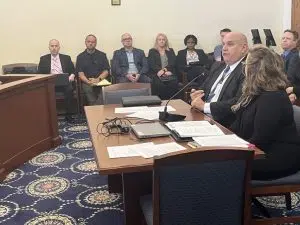
The department presented its annual report before the Legislative Council’s Auditing and Financial Reporting Subcommittee on Thursday, detailing its traditional duties alongside its added workload from federal dollars and proposals for future legislative action.
Communities receiving funds from either the CARES Act, the American Rescue Plan Act (ARPA), or the Bipartisan Infrastructure Law have until the end of 2026 to spend all of the funds, though various accounts have earlier deadlines.
Cris Johnston, the director of the Office of Management and Budget, noted that each pot of money had different missions for their dollars.
“The CARES Act was really looking in the rearview mirror, covering your cost of fighting the pandemic. It’s pretty easy to identify a cost that you incur,” Johnston said. “The ARPA and infrastructure dollars that came into the local units, you’re looking forward.”
Many, especially smaller municipalities, may not be familiar with a more forward-looking federal spending plan.
“A lot of times, in order to meet these federal guidelines, you have to put a plan together, submit it to the federal awarding agency, and get them to sign off on that. Then you’ve got all of the terms that go behind that as well,” Johnston said. “It’s a much more protracted planning process and execution process than it appears.”
See the full story here.